
James
Leitrim → Bridgeport
His Atlantic story01 / A McPadden story · Leitrim & Scotland
Thomas McPadden & Alice Hendry
James went to Bridgeport. His younger brother Thomas went to Scotland—and came back to Leitrim with a family of his own.
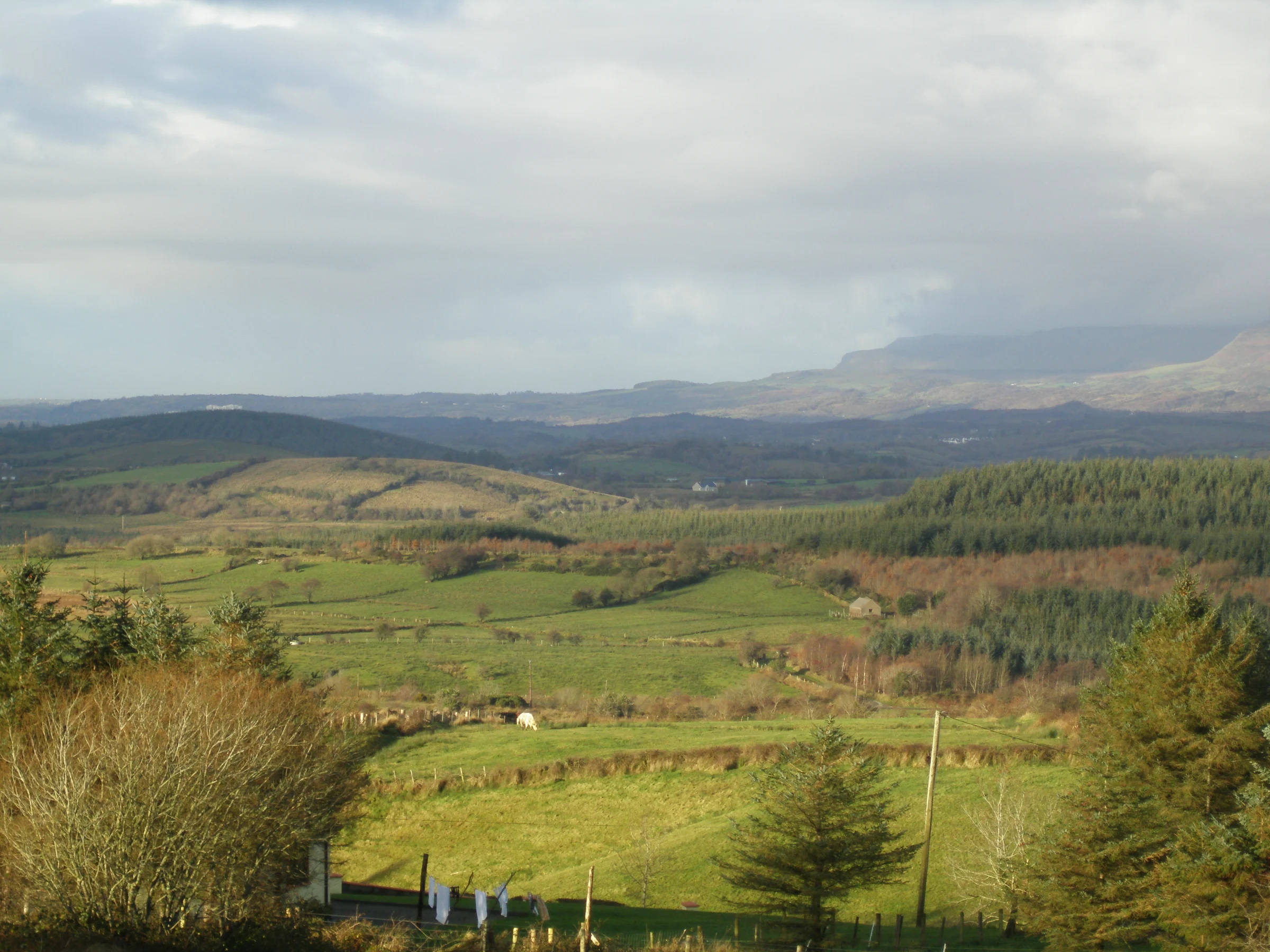
Follow another McPadden journeyCounty Leitrim countryside · 2006Modern regional context, not an identified McPadden holding.
The same roots. Different lives.
Thomas was born at Tullynascreen on 11 December 1876, a son of Michael McPadden, a farmer, and Mary Conlon. James’s Atlantic journey is one part of this family’s history. Thomas and Alice’s is another.
Leitrim → Bridgeport
His Atlantic storyScotland · Leitrim · a reported return
Not just a journey away.Before the Glasgow marriage · Departure date unknown
By October 1900, a young man born at Tullynascreen was living and working in Glasgow. Before we meet Thomas and Alice there, explore one way he might have crossed between those worlds.
He was 23 at his marriage—not necessarily at his first crossing. Neither his departure date nor his arrival age is known.
About 30–37 hours of movement in a speed model, plus unknown transfers and waiting.
These are approximate model distances, dominated by our hand-drawn sea and Scottish route sketches—not recovered travel mileages. They must not be added into one continuous travel day. See the measurements and assumptions.
Continue toward Thomas and Alice’s Glasgow storyMotion paused · All geographic links shown.
01 / On foot—or a horse-drawn lift?
Age at departure unknown
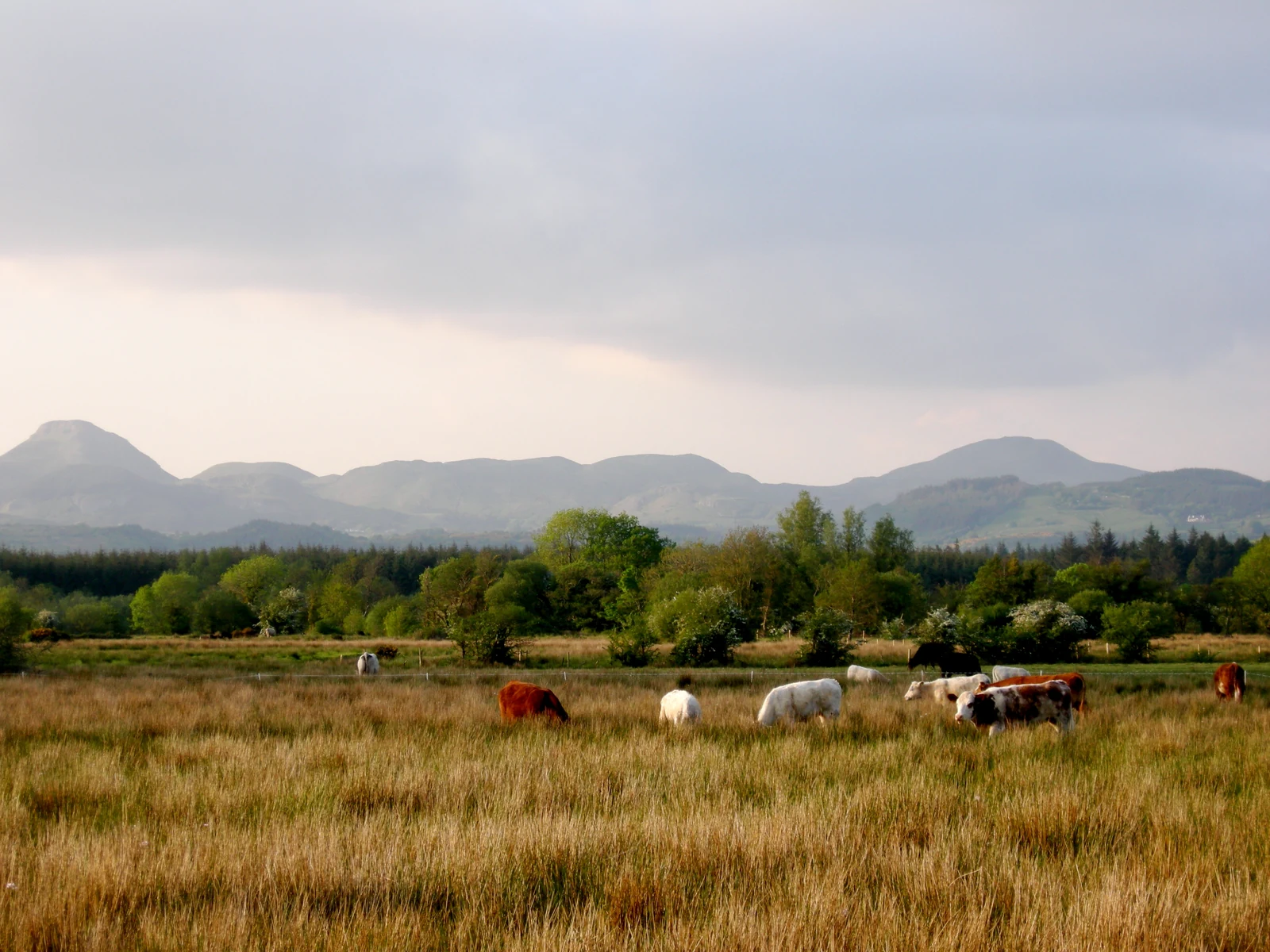
Near Dromahair, 2008. Regional setting—not Thomas’s road or a view of his departure.
IrishFireside · Cow Field · CC BY 2.0Display crop and gentle pan; no reconstructed objects. Reuse statement.
A sailing did not begin at the cottage door. One possible approach was to reach Dromahair station first: on foot, with a lift, or by horse-drawn transport. We cannot choose between them for Thomas.
This candidate through Five Cross Roads excludes the private approach and station entrance; its historical alignment is not fully validated. Dromahair opened in 1881, with the through Sligo connection in 1882. This is a network example available by the 1890s, not a dated departure.
02 / Steam train · via the Collooney area
A possible rail connection
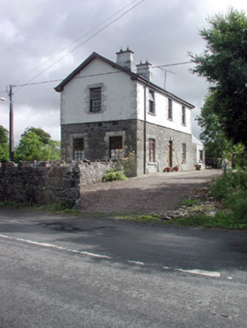
Railway worker’s house, built c.1880. Later NIAH survey image; survey record dated 2003, exposure date unverified. Not identified as the ticket hall.
© Department of Housing, Local Government and Heritage · NIAH · educational useFull-frame proportional display. Private property: no invitation to enter. Reuse statement.
From Dromahair, a passenger could travel around the southern side of Lough Gill toward Sligo. This was a railway journey, not a straight dash west to the sea. Arriving at the station still left another connection to make.
The later parcel-distance book lists Dromahair at 34 miles and Sligo at 49 miles from Enniskillen: a difference of 15 miles. It does not tell us which train Thomas took, its running time, or whether he used the railway at all.
03 / A local transfer · on foot or by hired transport
Sligo is an example port—not an established one
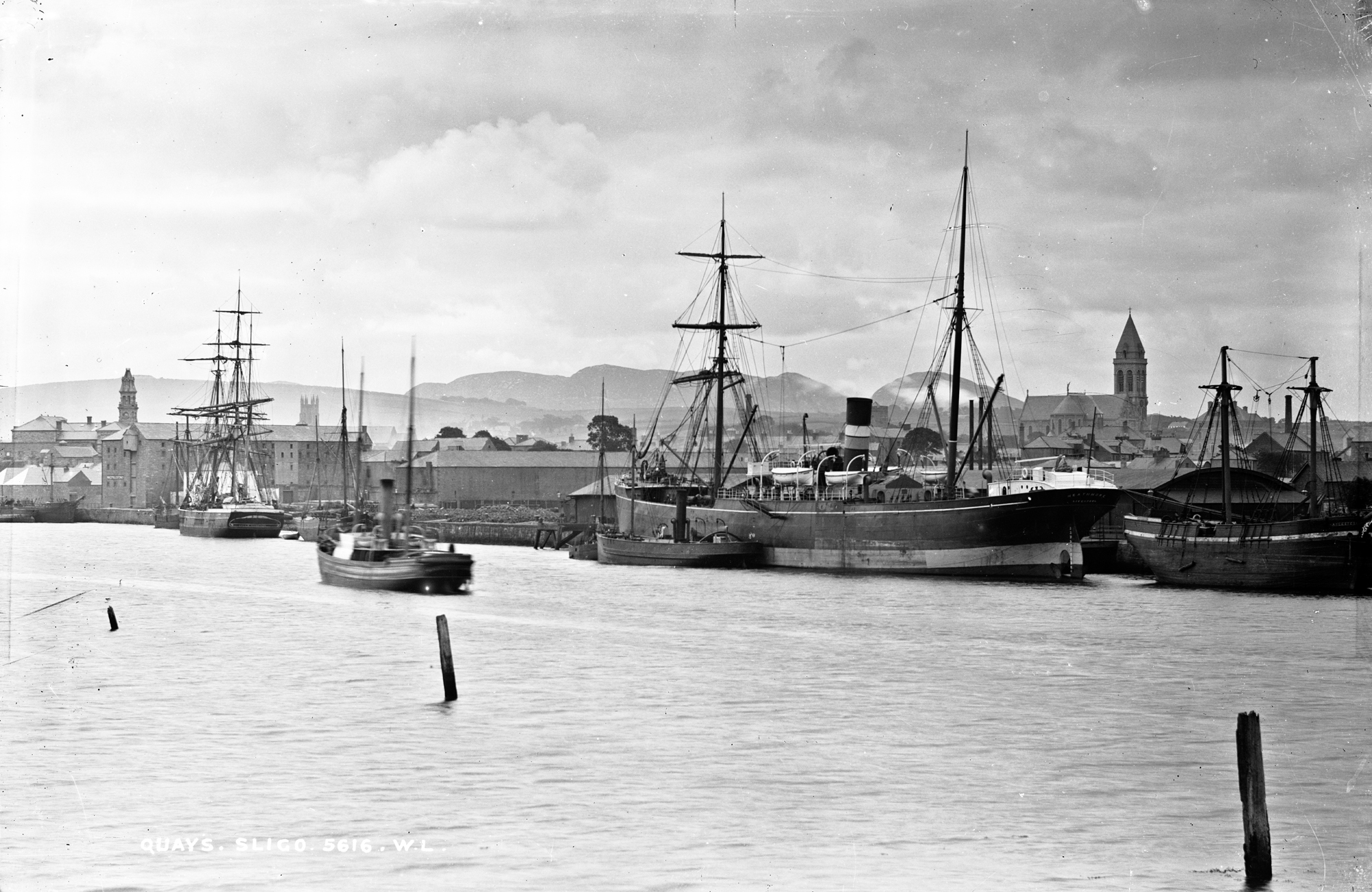
The Quays, Sligo. Catalogue range c.1865–1914; NLI suggests the 1890s from the ships. A working waterfront—not Thomas’s identified ship or berth.
Robert French · Lawrence Collection · NLI L_CAB_05616NLI Commons: no known copyright restrictions. Display crop and gentle pan; original image unchanged. Reuse statement.
A train ticket did not carry someone aboard a steamer. There was baggage to move, a waterfront to reach and a sailing to wait for. The photograph makes that working world visible; it does not place Thomas on one of these ships.
We have not identified his port, berth, ticket or ship. This unmeasured transfer is additional to the distance model—not silently treated as zero.
04 / A possible coastal steamer
Departure date still unknown
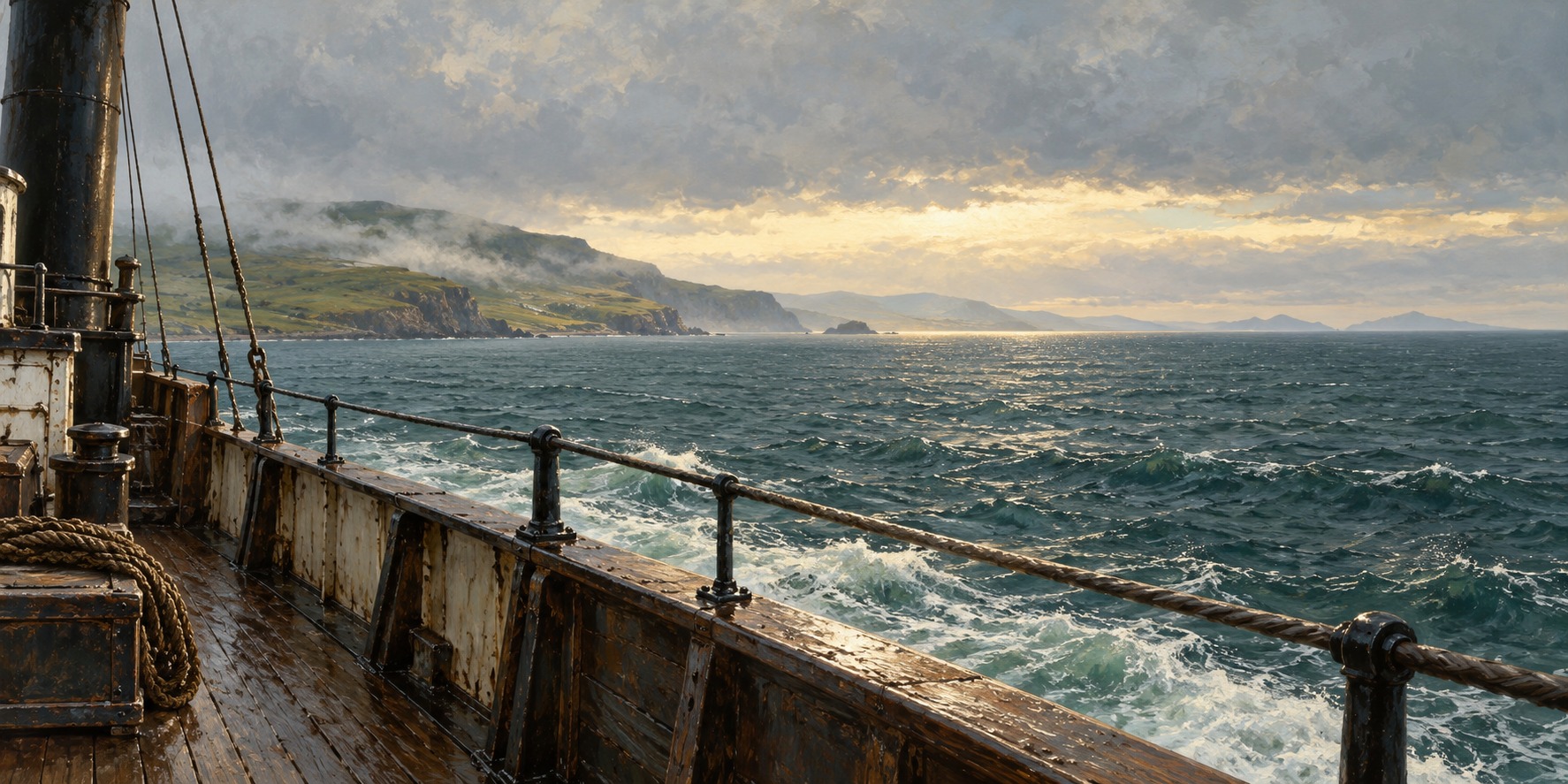
Land falling away, open water ahead. Period-inspired atmosphere—not a photograph, Thomas’s ship, or a recovered view of his journey.
The McPadden Project · generated illustrationCreated with OpenAI image generation. Display crop and gentle pan; no claim to document a specific vessel, coastline, departure or weather. Reuse statement.
The example bends around northern Ireland and into the Clyde rather than cutting across land. At an assumed 8–10 knots, that sketched distance means more than a day under way. A connection missed, a port call or rough weather would add time.
A 1903 account lists Sligo among ports connected with Glasgow and Greenock. It postdates his 1900 marriage. The sketch and chosen speeds are explanatory assumptions, not a recovered route, a performance claim for a particular ship or Thomas’s passage time.
05 / A documented life in Glasgow
23at his marriage · 26 October 1900
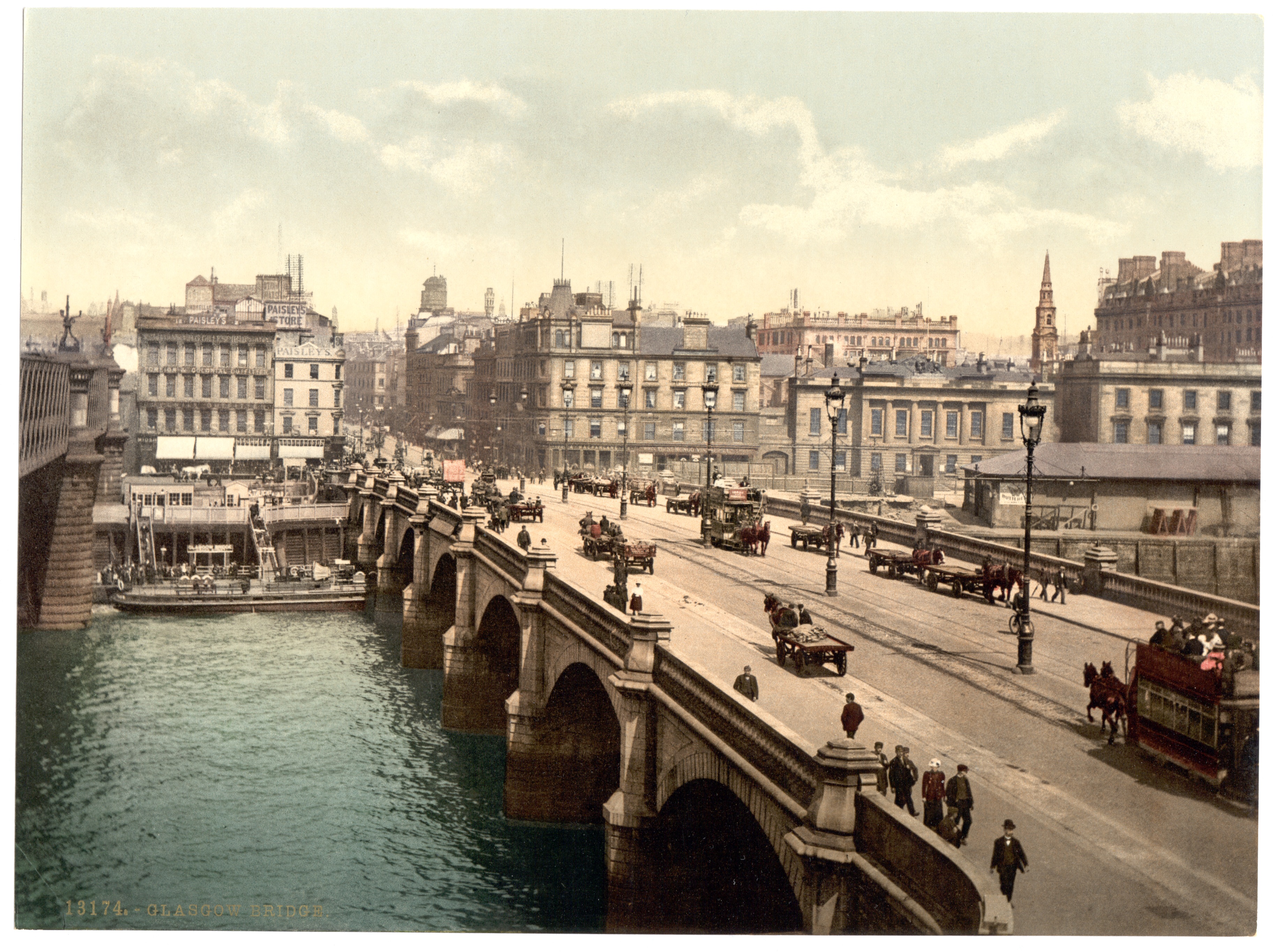
Glasgow Bridge and the Clyde, c.1890–1900. A photochrom—a period colour print, not a modern colour photograph. City context, not a verified arrival scene.
Library of Congress · Photochrom Print Collection · LC-DIG-ppmsc-07598LOC: no known restrictions on reproduction. Display crop and gentle pan; no newly generated or reconstructed details. Reuse statement.
By his wedding day, Thomas was an engine-works labourer in Kinning Park. Alice Hendry was a soap boiler. Glasgow was not simply a change of trains: it was a place where they worked, married and began a shared life.
He was 23 at the marriage, not necessarily 23 at his first crossing. We do not know when he arrived. The later move to Argyll belongs to another part of their lives, not the next hour on the same travel clock.
Thomas’s 11 December 1876 birth, 26 October 1900 marriage and his son’s 29 July 1908 birth anchor the places and ages. We do not have a departure date, ticket, chosen Irish port, confirmed ship, Scottish train or exact local approach.
The coastline is generalized, public-domain Natural Earth geography, reused from the project’s existing source. Places are regional reference points, not private homes. The offshore corridor is hand-selected to illustrate a connection around northern Ireland, not recovered from a ship’s log or navigation chart. Other dotted links are geographic connections, not traced roads or railway alignments.
How the model is calculated. Road: 5.6 km from the existing road comparison. Irish rail: 15 miles × 1.609344. Sea: about 518 km measured along our hand-selected offshore sketch. Scotland: about 148 km between coarse route-place points via Stirling, Callander and Crianlarich. The last two are sketch lengths, not charted sea miles or traced railway mileage; changing the drawing changes those estimates. The displayed totals are deliberately rounded.
Time assumptions, not historical performance claims. Walk at 3 mph; cart at 3–4 mph; Irish train at an assumed 15–20 mph average; steamer at an assumed 8–10 knots (1 knot = 1.852 km/h). Distance divided by speed gives running time only. These chosen speeds are not evidence about Thomas’s vehicles. The Scottish 4 hr 6 min comes independently from a real 1897 timetable. No departure date, fare, sailing calendar, port call, weather delay, ferry time or total elapsed time is established. Local transfers remain additional and unmeasured.
The Irish example is about 340 miles / 550 km in this model; the later Scottish sketch is about 90 miles / 150 km before its local approach. Do not combine them into one journey or one travel day. The progress bar measures the reader’s exploration only. Image captions distinguish historical views, later photographs and newly generated illustrations. None identifies Thomas, a ship he took or his house; the illustrations are atmosphere, not records.
Kinning Park, Scotland · 26 October 1900
The years between Thomas’s Irish birth and his Scottish wedding are still largely out of view. But at Kinning Park in 1900, a second life comes into focus: Alice Hendry’s. The next chapter begins with the record that brings them together.
Meet their two working livesBehind this scene
Thomas’s 11 December 1876 birth registration names Michael McPadden and Mary Conlon. His 26 October 1900 marriage registration names those parents again, with Michael deceased, and records his marriage to Alice Hendry. The Scottish spelling McFadyen is linked through these family details, not assumed equivalent for every bearer.
Explore the marriage in chapter 2, the three Scottish births in chapter 3, Martin’s military clue in chapter 4 and the census in chapter 7. All five originals are also in the Research Library. Other scans remain private where publication clearance or identification is unresolved.
Leitrim 03, RedHotHeat, 16 December 2006. CC BY-SA 2.5. Modern regional context, not Tullynascreen or an identified McPadden holding.
Display crops, shading and optional pan/zoom are applied to the opening image. No depicted objects in that source image were generated, removed or reconstructed. The photograph and its image adaptations retain their stated license, separately from the site’s writing.
The documentary trail
The registers, returns and papers behind this chapter. Open a card for its evidence and limits, or follow it into the Research Library.
These are record summaries, not recreated documents. The marriage, three Scottish birth entries and census have original-record views with their own reuse terms. Other scans remain private where clearance or identification is unresolved. Family-history leads are labeled separately.
Thomas’s birth date and place, with Michael McPadden and Mary formerly Conlon named as his parents. The parents also appear in his 1900 marriage entry.
What this does not establishIt does not date his first departure from Ireland or identify a route to Scotland.
SRC-010, Irish civil birth register, Dromahair district, County Leitrim, 1876, entry 445: Thomas McPadden, born 11 December at Tullynascreen. Preserved original-image copy; exact external item link still to be recovered.Original preserved privately · image reuse not yet cleared
Citation & access in the Research LibraryThomas, 23, an engine-works labourer, with an address provisionally read as 17 Vulcan Street, Kinning Park; street identification unresolved. Alice, 21, a soap boiler of 55 West Scotland Street. Thomas’s parents are Michael, deceased, and Mary Conlon; Alice’s parents are Hugh Hendry and Elizabeth, formerly Treanor (working reading).
What this does not establishThe entry does not explain how they met or when either arrived in Scotland. Alice’s recorded age conflicts with the later census; her mother’s maiden surname remains a qualified reading.
SRC-052 · National Records of Scotland, statutory marriages, Kinning Park, 1900, 644/14/331, entry 331, page 166. Preserved Scotland’s People viewer copy. Page number corrected from 168 after image review, 22 October 2026.Original record available · source-specific reuse terms
Citation & access in the Research LibraryCan you add to their story?
A family memory or a document with a name, date or place could help us follow Thomas and Alice further.
A letter, an address or a family memory from before his 1900 marriage could help trace the years between Tullynascreen and Kinning Park.
Share a lead by emailEmail opens a private conversation with Ed. Please keep living people’s personal details out of your first message. We will discuss permission and credit before sharing anything on the site.
Other ways to get in touch