
Beardsley Park becomes a named place in the family story.
The card names Mr. George S. Keen and Beardsley Park, City of Bridgeport. It does not reveal James’s specific duties or commute.
James & Catherine McPadden · Bridgeport · 1940–1942
Beyond the factory walls and the changing addresses,
another part of James’s city comes into view.
The lake, Beardsley Park · Rotograph postcard, 1905, with gently animated water. An earlier view—not James’s workday in 1942. View the unaltered postcard · Library of Congress ↗
In 1904, Bridgeport was the destination written beside his sister’s name. Decades later, it held the home he shared with Catherine McNiff, their growing children, and the places where he worked.
The records have taken us through industrial work and a hardware shop. Now they lead somewhere different: the city’s parks.
Two records bring a place into focus
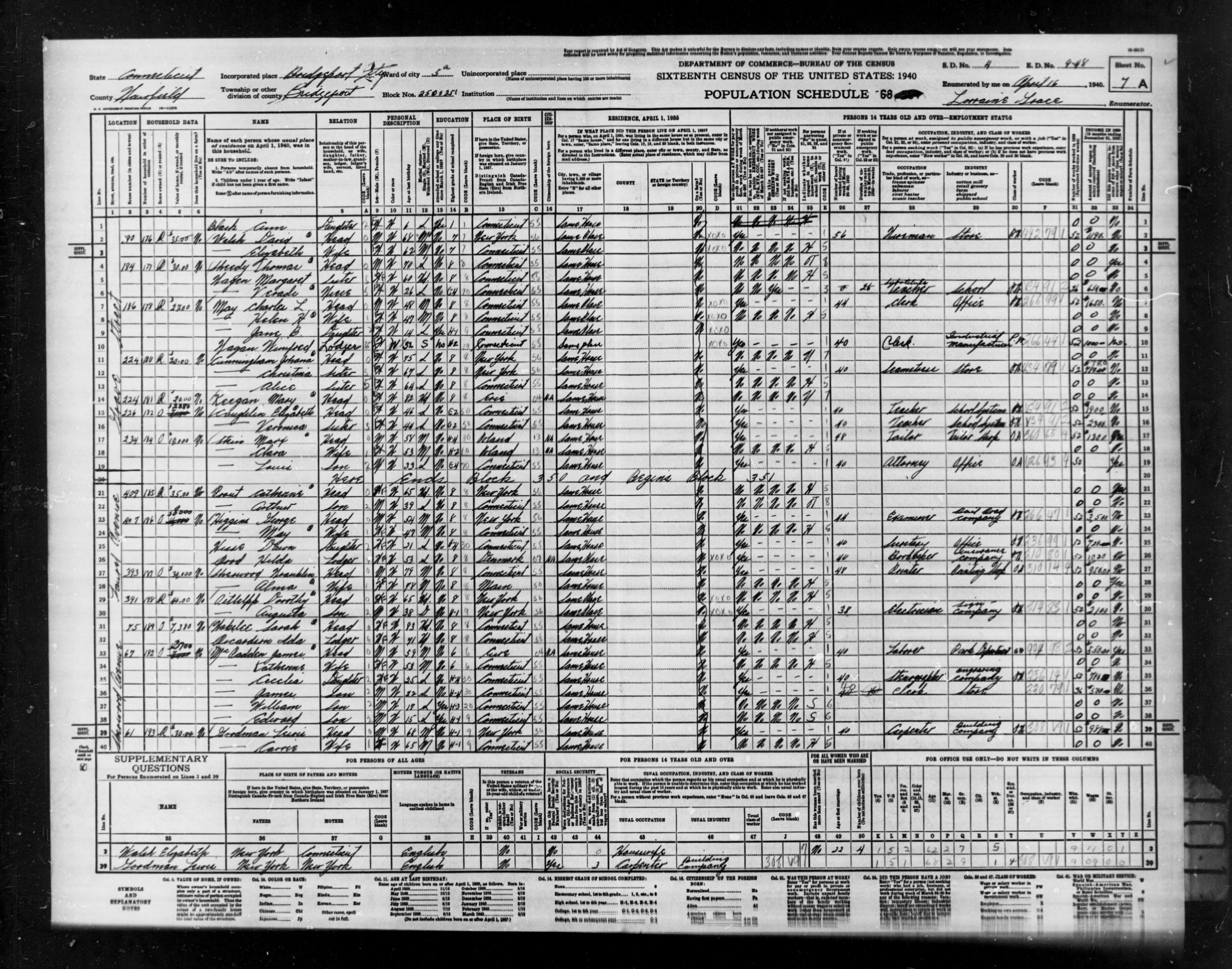
The 1940 census records James as a laborer in the Park Department. Two years later, his registration card supplies a name we can place in the city: Beardsley Park.
A lake, trees, paths, a public landscape: the postcard gives us a glimpse of the place’s earlier appearance. The card gives us James’s connection to it. Neither tells us which work he did there.
Selected readings from the 1942 card are shown below. The original image is not included in this edition; its citation and holding-source link are in the Research Library.
Catherine McNiff McPadden · his wife
Before the form asks where James works, it asks for someone who will always know his address. He names Catherine.
Thirty years after their wedding, she is still there in the written record. Not a complete portrait of their marriage, but a relationship we can see continuing across the years.
Her life was larger than the space on his form. Following Catherine means seeking her own words, photographs and memories too.
From a preserved record to a remembered person
A voice. A habit. Something he said at home. A photograph with names on the back. For relatives who knew James or Catherine, an ordinary memory could add something no official form thought to ask.
We have reached the edge of this chapter’s evidence, not the end of their lives. Their five children carry the story onward.
Have a family memory or photograph? Start with a note No automatic publication. We will discuss the source, permission and any living people’s privacy before sharing material.Two documents connect James to Bridgeport’s Park Department and Beardsley Park, while Catherine remains the person who would always know his address. They do not describe his route, duties or feelings about the work.
Two documents · three human anchors
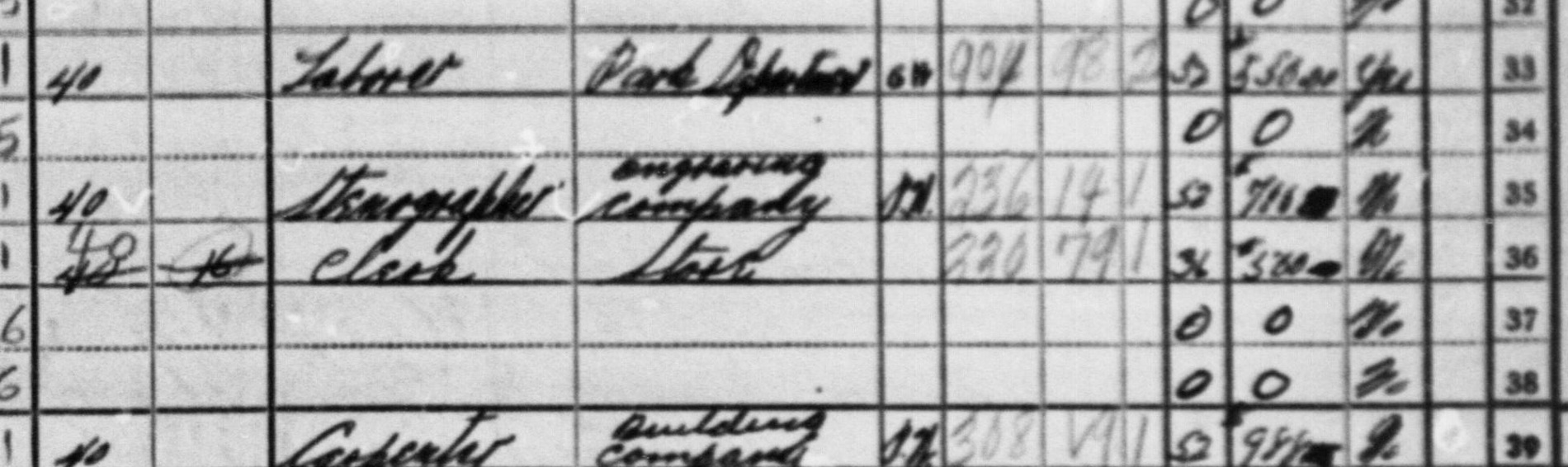
The record supplies an occupation and industry. It does not name his tasks, hours, pay or exact work site.
Registration is not military service. The card’s recorded birth date conflicts with the Irish record. The reverse has not been verified from this copy.
Project-authored factual summary—not a facsimile or complete transcription.Citation and research context ↗View the holding sourceSelect a field below, then compare our reading with the handwriting.
The card names Mr. George S. Keen and Beardsley Park, City of Bridgeport. It does not reveal James’s specific duties or commute.
Our rule: an occupation and workplace can anchor a human story without authorizing us to invent the workday.
The end of this story · not the end of the family
By 1942, a journey across the Atlantic has become a marriage, work, changing homes and five children with lives of their own. Their later histories need their own records and carefully attributed memories. We leave them as people still to be understood, not simply names at the end of a chart.
Living descendants remain private by default. Family memories and photographs need permission and provenance before they become part of this shared history. There is no public upload or profile service yet.