
A farmer in her own right
The occupation is recorded. The size, income and daily routine of the farm are not.
04 / The work of staying · Tullynascreen · 1901
The family’s world was widening.
Mary’s life was here.
Eighteen years after Michael’s death, the census names Mary at the head of her household. Beside her name, an occupation: farmer.
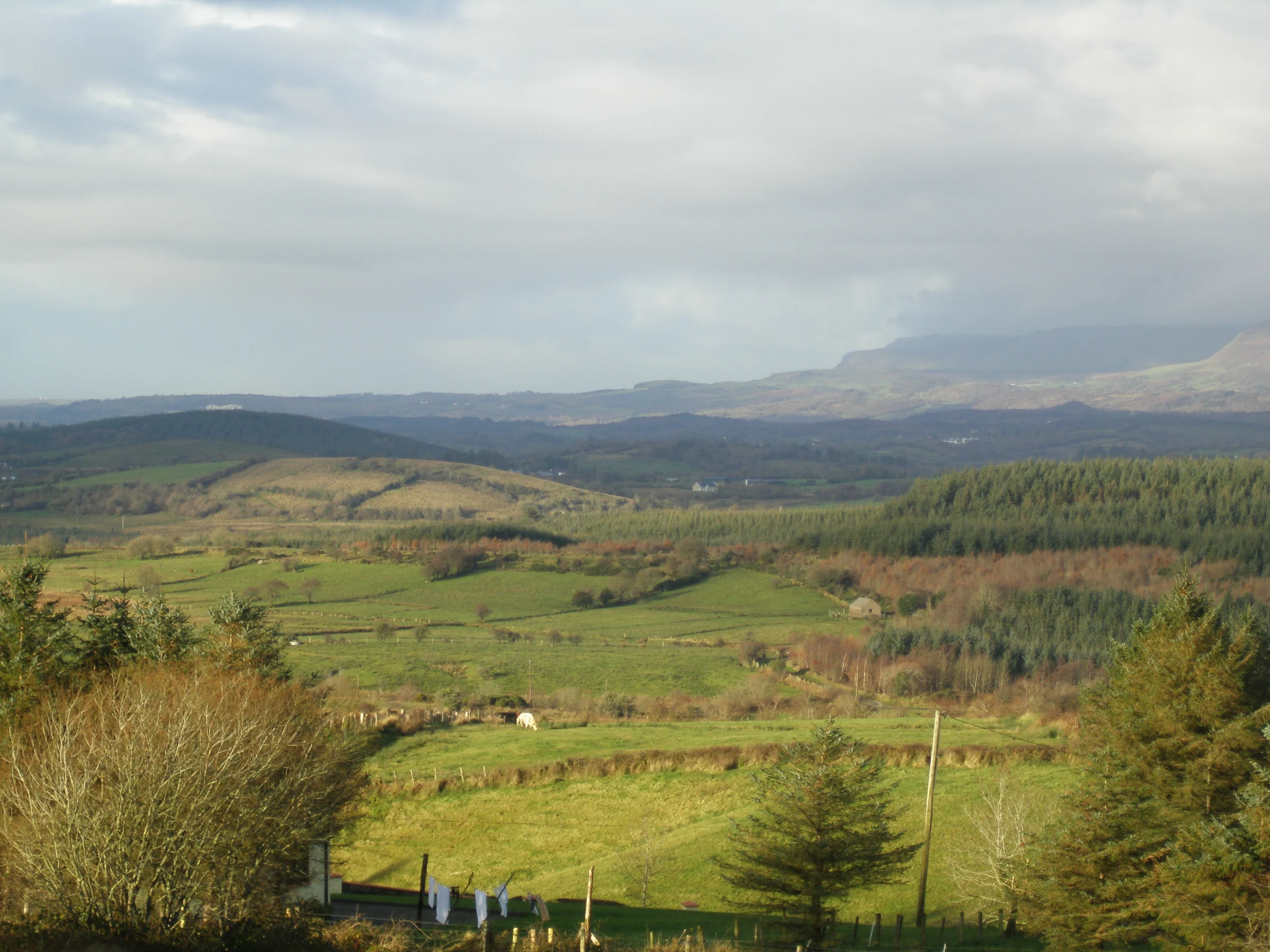
Meet the woman in the recordModern Leitrim landscape—not Mary’s land. “Leitrim 03”, RedHotHeat, 2006. Image credit & CC BY-SA 2.5 ↗ Framed, shaded and gently animated.
The occupation is recorded. The size, income and daily routine of the farm are not.
The return records both languages. It does not tell us when or with whom she used them.
Her two sons are recorded at home that night. The older Martin witnessed her mark.
Census house 10, Tullynascreen · 31 March 1901
Widow · farmer · household head
Eighteen years after Michael’s death, the census records Mary at the head of a Tullynascreen household with sons Michael and the older Martin. Her occupation was farmer.
Mary could not read or write, and she spoke Irish and English. Martin, who could read and write, witnessed her mark. His occupation—puddler—points toward skilled industrial work that could not have been practiced on this small rural farm.
One entry does not fit: Mary’s age is written as 43, which conflicts with her earlier marriage and her adult sons. Her recorded work, household and languages can still bring her into focus without accepting that age.
Original census household with one conflicting age fieldThe return records who slept or abode in the house that night. Missing children are not thereby dead, emigrated or estranged. “Farmer” does not reveal income, ownership or daily routine by itself.
The recorded age of 43 conflicts with earlier records and her adult sons. This census-night household does not establish what happened to absent children.
Project-authored factual summary—not a facsimile or complete transcription.Citation and research context ↗